
Home Proteins Duck Skin Not Crispy
Duck Skin Not Crispy
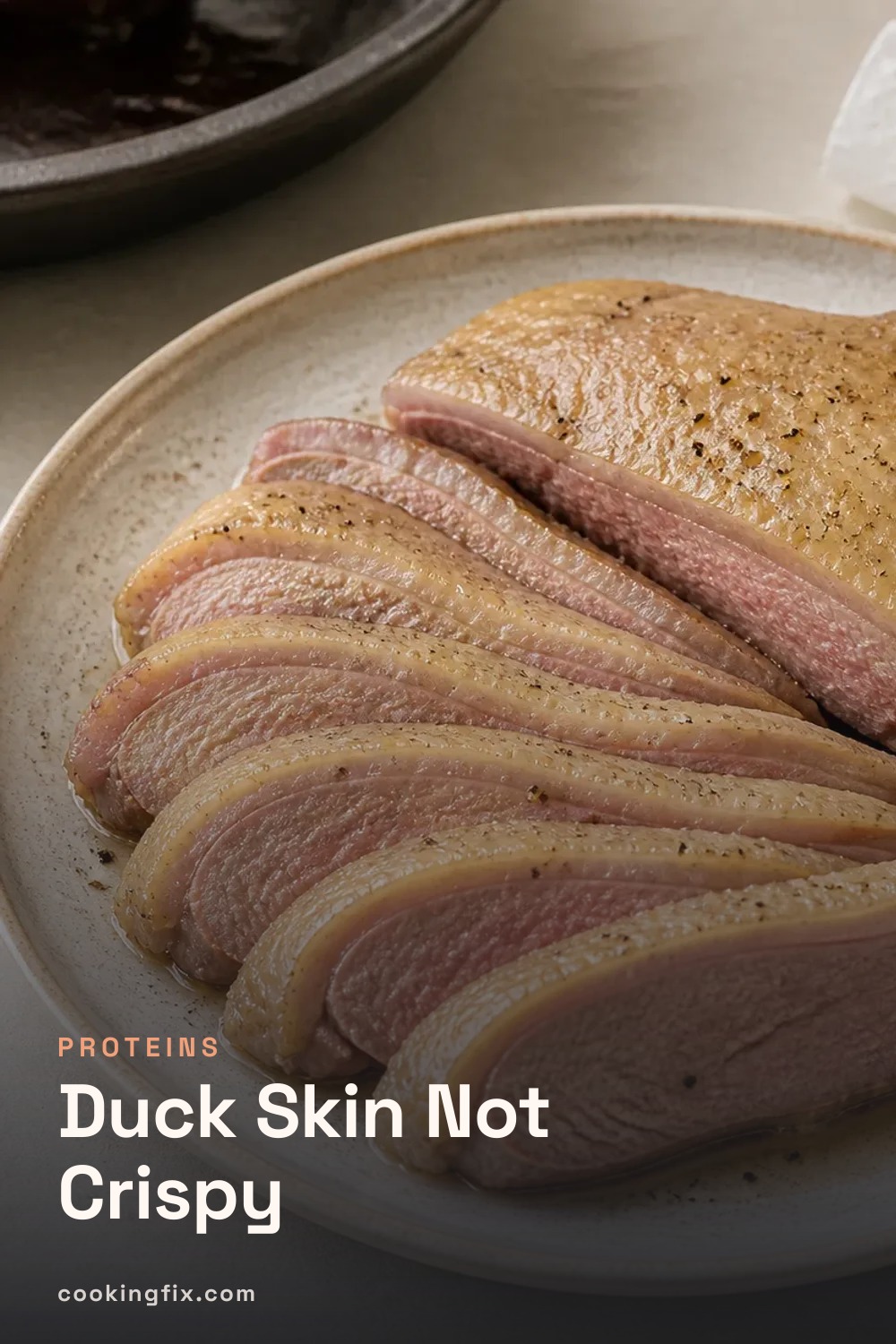
Duck skin that's flabby or pale means the fat didn't render before the skin hit high heat — here's how to rescue it and achieve a lacquered, crackling finish.
soggy duck skin · pale skin · fatty flabby skin · gluten-free · dairy-free · high-protein
The fix
Tap a step to check it off.
- 1 Score the skin with a sharp knife in a crosshatch pattern, cutting through fat but not into flesh
- 2 Pat skin completely dry with paper towels, then press kosher salt onto the surface
- 3 Place duck skin-side down in a cold, dry pan and turn heat to medium-low — let it render for 12–15 minutes undisturbed
- 4 Once fat has pooled and skin is golden, increase heat to medium-high for 2 minutes to finish crisping
If it's still wrong
- Transfer to a 425°F oven skin-side up for 8–10 minutes after the stovetop render — dry oven heat pulls remaining moisture from the skin.
- Air-dry the scored, salted breast uncovered in the fridge for 24 hours before cooking; the cold air desiccates the skin so it crisps almost instantly over heat.
Prevent next time
- Always start duck skin-side down in a cold pan with no added oil — duck provides all the fat it needs.
- Score through the full fat layer to maximize rendering surface area without cutting into the meat.
Notes
Why this works
Duck breast has a fat layer 3–5mm thick. Until that fat melts out, the skin sits on a cushion of grease and can’t dehydrate. The cold-pan method is counterintuitive but exploits a physical reality: the fat renders at around 120°F, well below the Maillard browning threshold of ~285°F. By spending time in the 120–200°F range first, the fat escapes and the skin collagen begins to set. Only then does the high-heat finish produce the crackling crust.