
Dough Too Sticky
Your dough sticks to everything and is impossible to shape. This usually means the flour has not fully absorbed the liquid yet, or the hydration ratio is too high. The fix prioritizes rest and technique over adding more flour.
Part of baking cooking fixes .
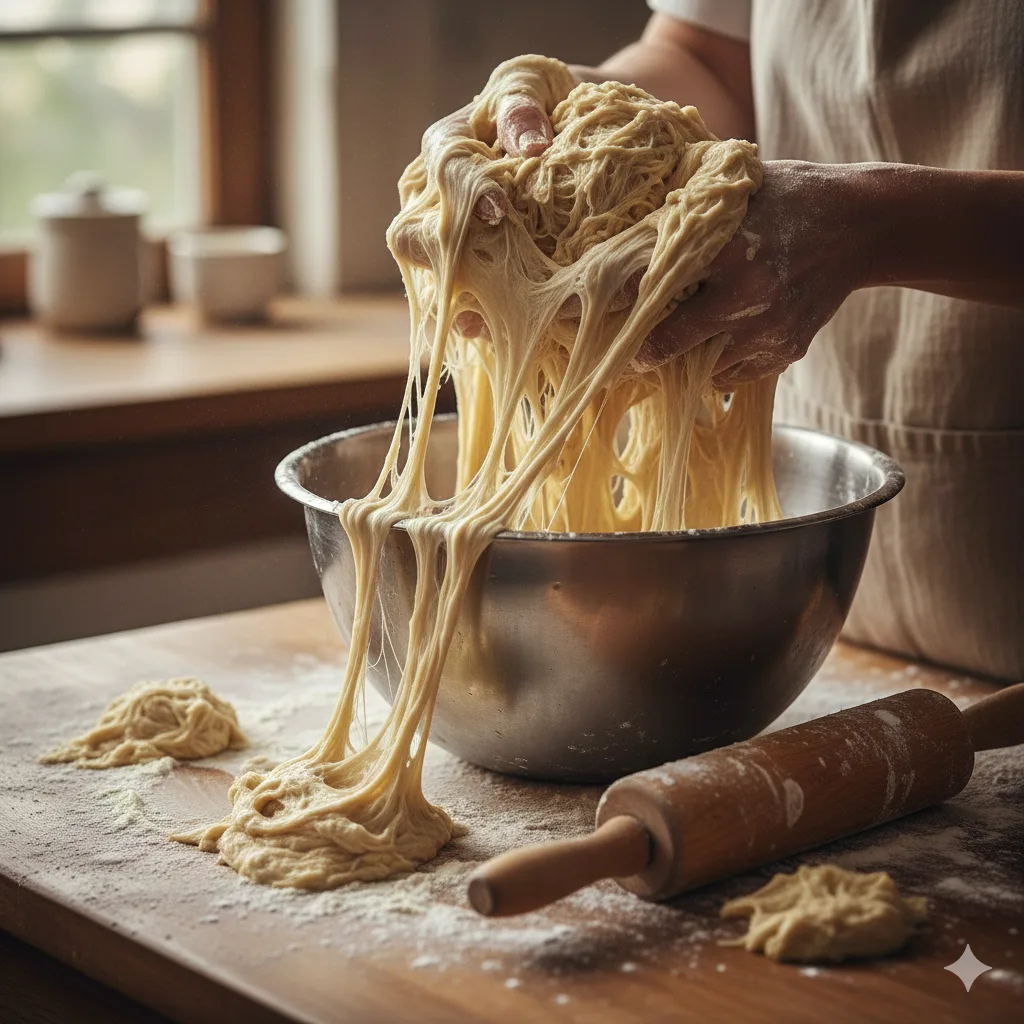
Ingredients on hand
- sticky dough
- all-purpose flour for dusting
- neutral oil or olive oil
- bench scraper
Why it happened
Sticky dough is often just under-rested dough. Flour proteins need time to absorb water and form organized gluten networks. Freshly mixed dough has disorganized, slack gluten that feels wet and tacky. After 15-20 minutes of rest (autolyse), the gluten hydrates and tightens, and the dough becomes noticeably smoother and less sticky. Oil on your hands creates a barrier that prevents sticking without altering the flour-water ratio.
The fix
- 1 cover the dough and let it rest for 15-20 minutes at room temperature; gluten development during rest makes it less sticky
- 2 oil your hands and the work surface lightly instead of adding flour, which can make the dough tough
- 3 if still unworkable, sprinkle 1 tablespoon flour over the dough and fold it in with a bench scraper; repeat only if necessary
If it's still wrong
- Refrigerate the dough for 30-60 minutes; cold dough is firmer and much easier to shape.
- Use wet hands instead of flour when shaping, especially for high-hydration breads like ciabatta or focaccia.
Prevent next time
- Measure flour by weight (120g per cup) rather than by volume, which can vary by 20-30%.
- Add liquid gradually, holding back the last 10%, and only add it if the dough is too dry after initial mixing.
- Let the dough rest 10 minutes after initial mixing before deciding if it needs more flour.
Notes
Why this works
When flour first contacts water, the starch granules on the surface hydrate quickly and become tacky, while the interior of each granule and the gluten proteins are still dry. This creates a sticky exterior with a dry, crumbly interior: the worst of both worlds. During rest, water migrates inward through capillary action and osmosis. The gluten proteins (glutenin and gliadin) fully hydrate, link into longer chains, and form an organized elastic network. This organized network feels smooth and pulls away from surfaces cleanly. Adding flour seems like the obvious fix but is counterproductive: it introduces more dry starch that will need even more time to hydrate, and excess flour makes the final product tough and dense.
Substitutions
- all-purpose flour → rice flour for dusting (does not develop gluten so it stays on the surface)
Other baking fixes